CalmCare Prototype
An Ambient Desk Object for Peripheral Stress Awareness
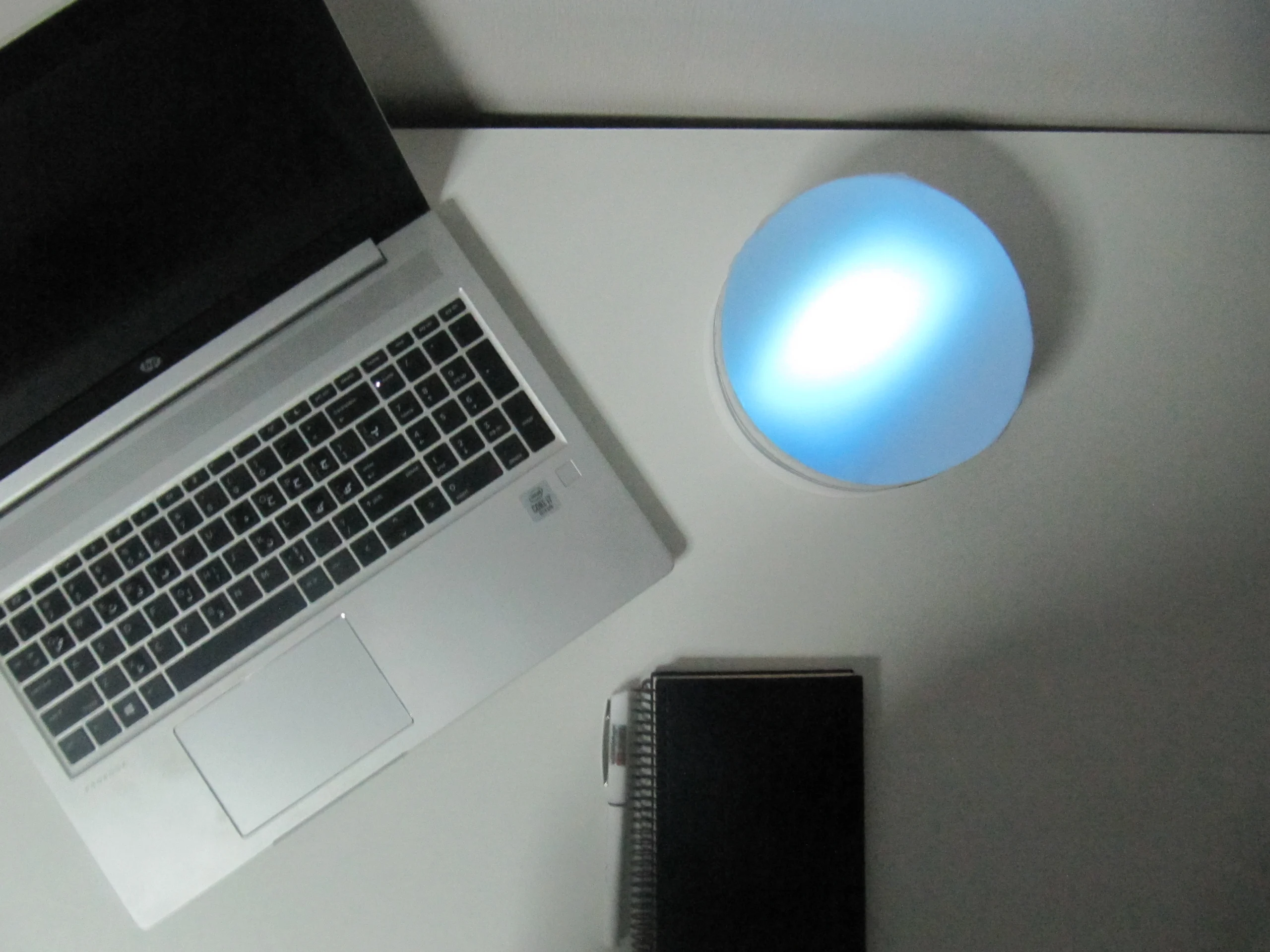
Summary: CalmCare is an ambient desk object that invites reflection during prolonged work through subtle light cues, rather than monitoring or alerting the user.
- Role: Interaction Designer / Researcher
- Tools: Wizard-of-Oz prototyping · Interaction sketching · Physical prototyping · Ambient light simulation · Video documentation
- Duration: 2 weeks
Motivation & Framing
Rather than monitoring the user, CalmCare senses the situation of prolonged work and invites reflection through ambient cues.
The intention is not to detect stress, but to gently support awareness without increasing cognitive or emotional load.
Design Principles
Peripheral, Not Demanding
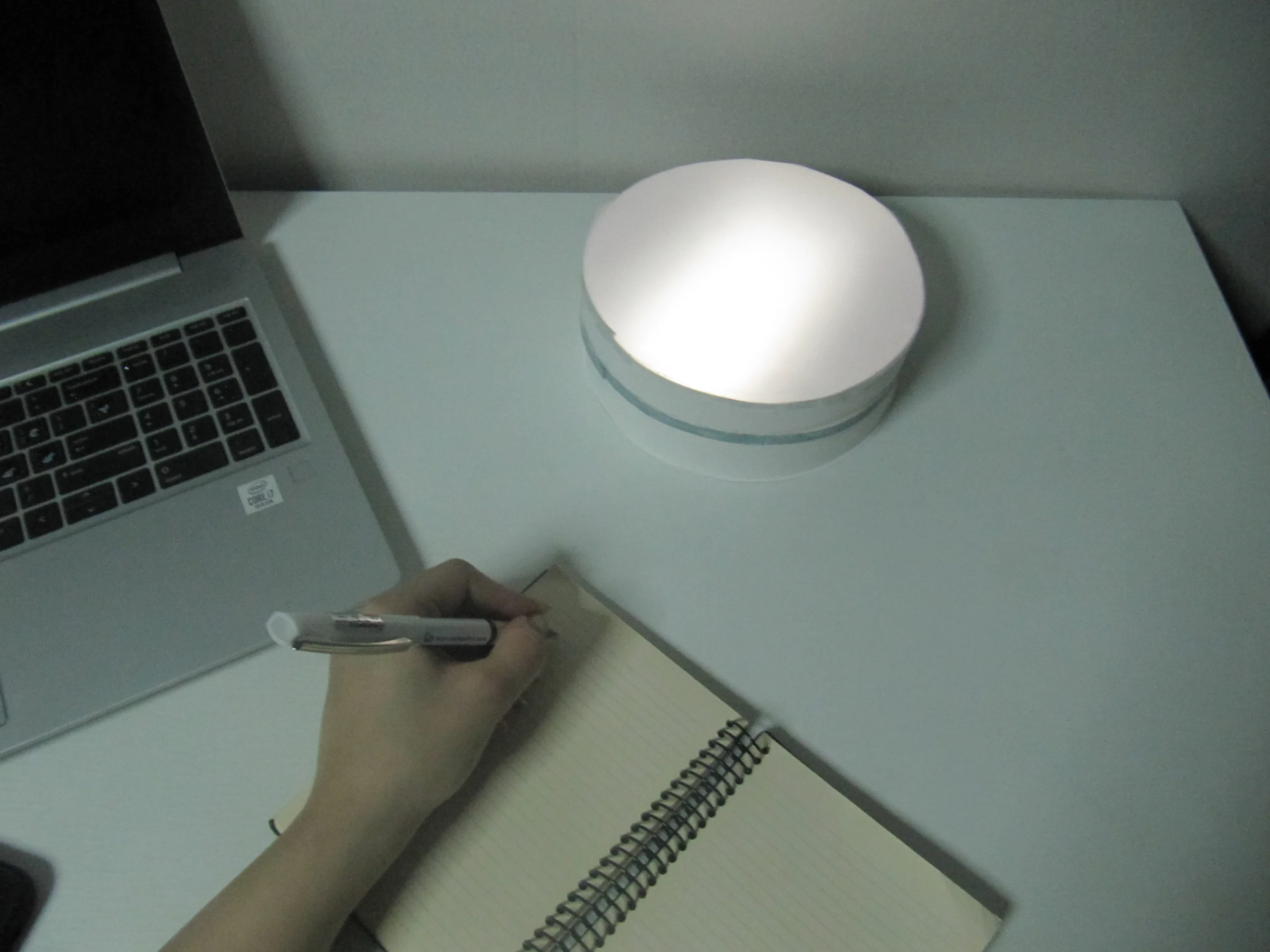
A desk object that exists in the periphery rather than demanding interaction.
Why a Flat Circle
By removing the vertical structure, the object becomes less legible as a device and more legible as an ambient presence, aligning with the goal of peripheral awareness rather than focused attention.
Interaction Philosophy
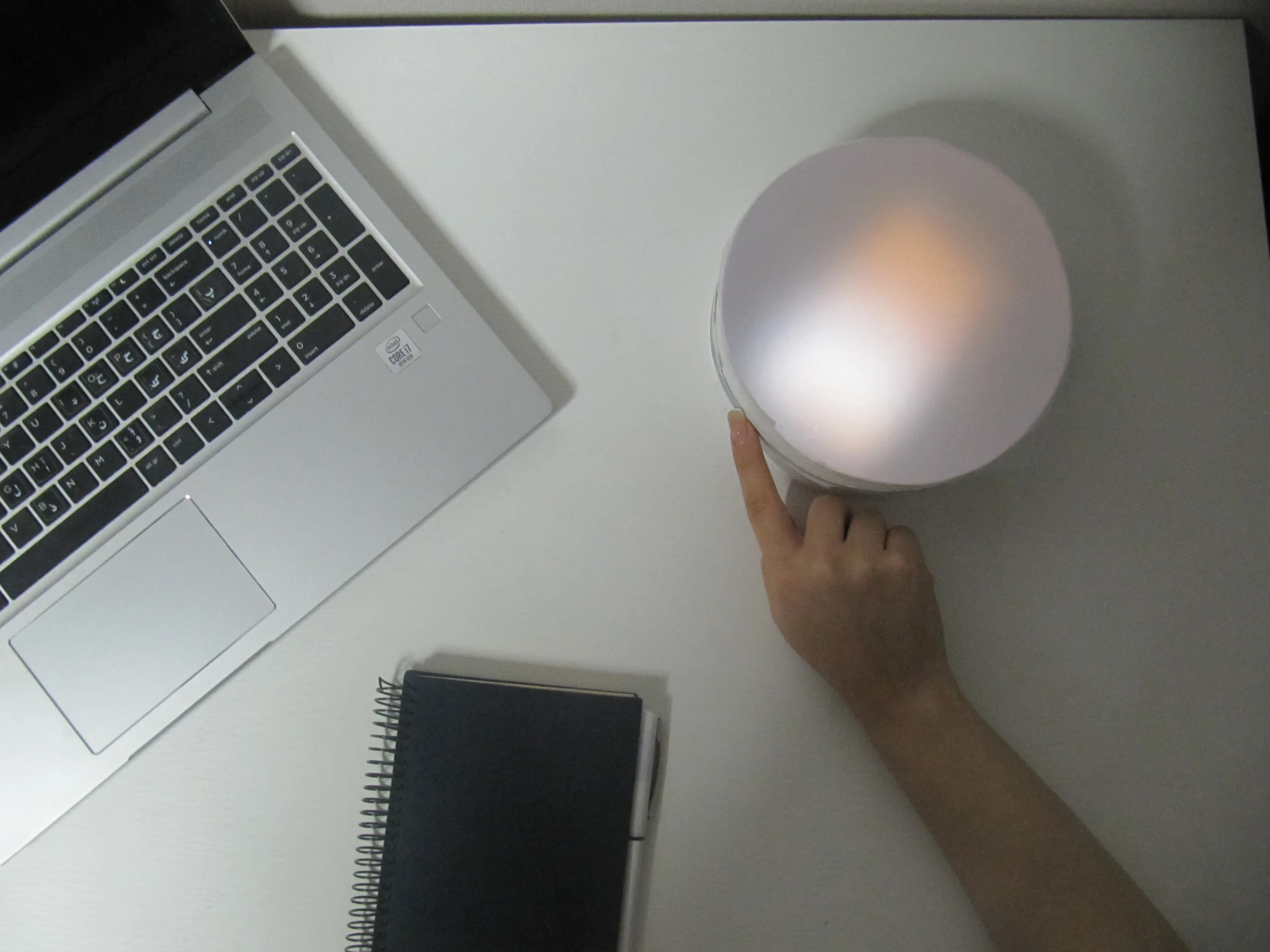
CalmCare deliberately avoids physiological sensing. The goal is not to automatically detect stress, but to support awareness and reflection without increasing cognitive or emotional load.
Rather than detecting stress automatically, CalmCare allows users to acknowledge their own state through a gentle tap, reinforcing agency and self-awareness.
Conceptual Interaction States
Calm focused
Prolonged work
High stress
Break taken
Prototyping Approach (Wizard-of-Oz)
A Wizard-of-Oz prototype was used to explore light behavior, interaction timing, and emotional response before committing to technical implementation.
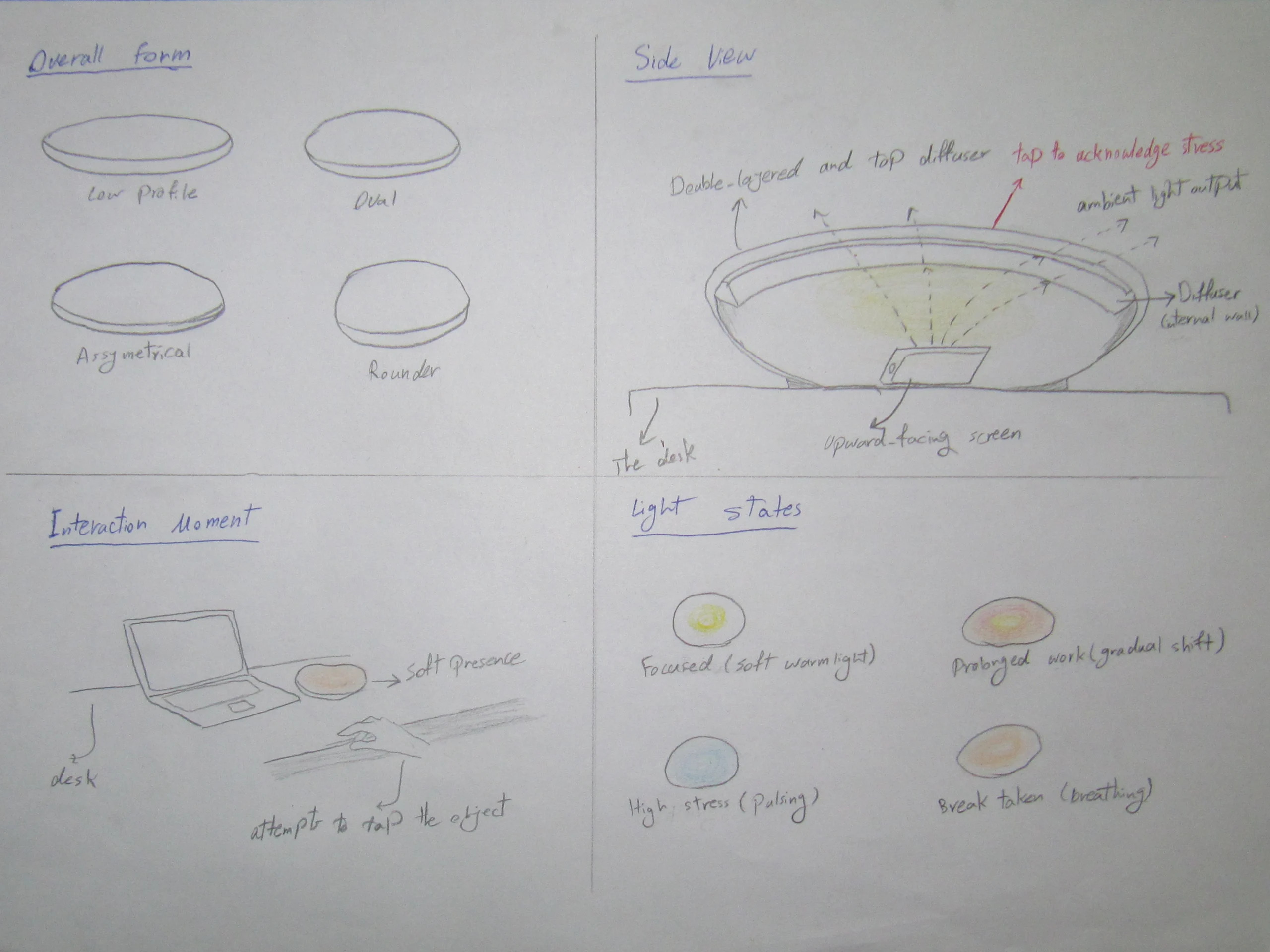
4 Main Sketches
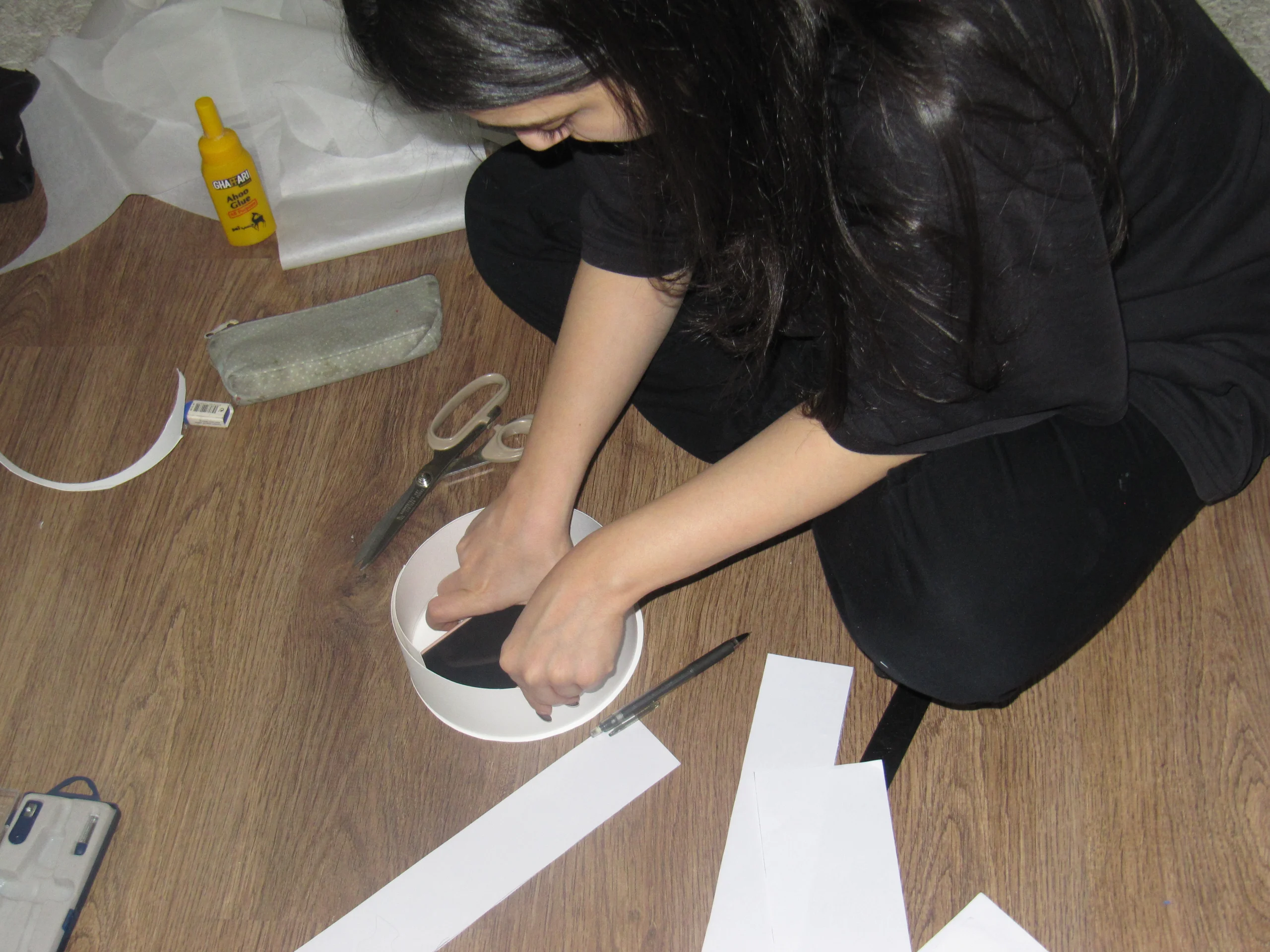
Behind-the-scenes
Physical Form & Light Behavior
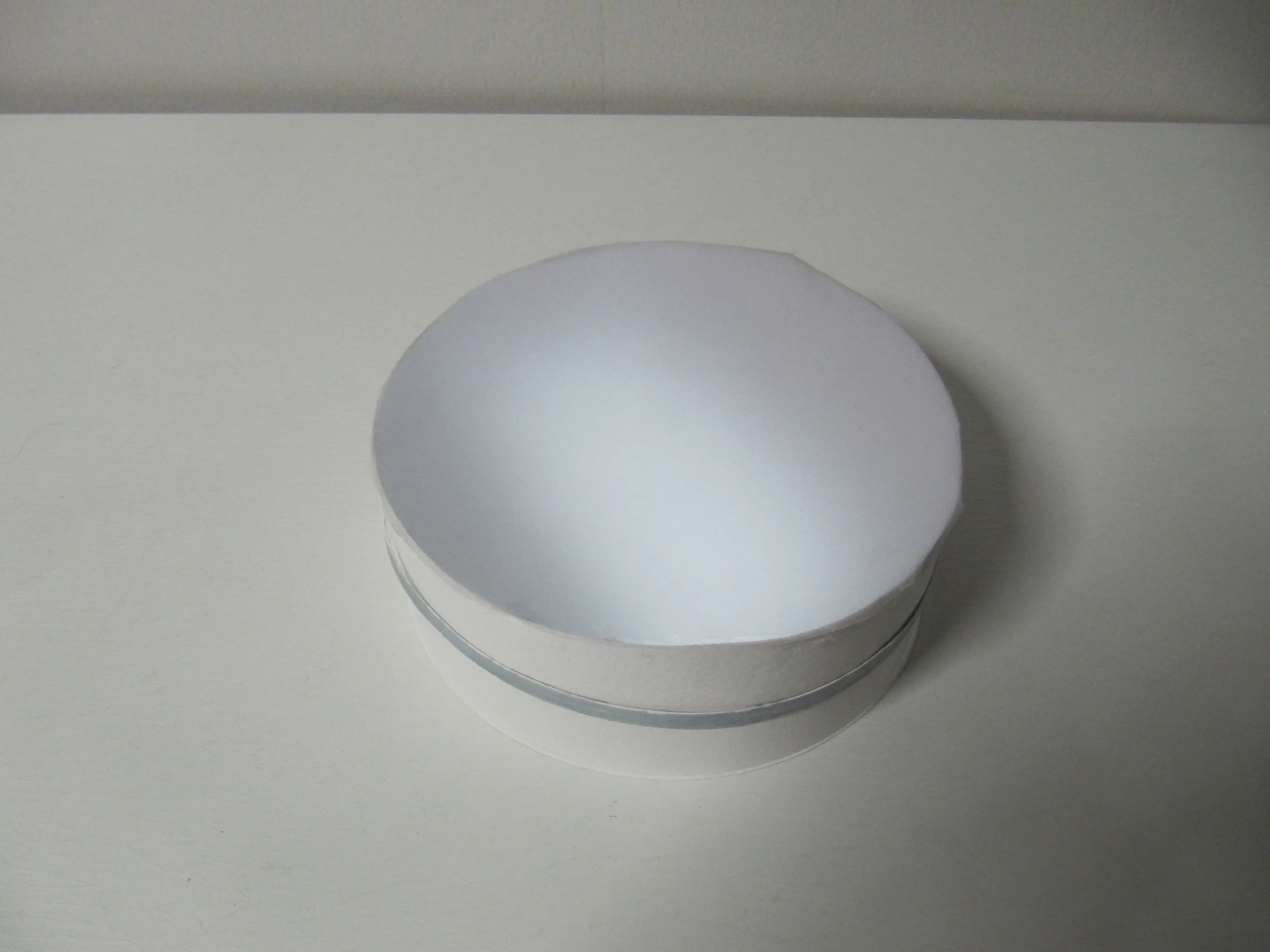
CalmCare’s physical form is designed to soften and diffuse light rather than emit it directly. A smartphone placed beneath the surface acts as a concealed light source, while the circular enclosure reflects light inward before it passes through a translucent diffuser layer.
This indirect light path reduces glare and sharp contrasts, allowing the light to remain perceptible in the user’s peripheral vision without demanding focused attention. The diffuser transforms discrete color changes and motion into a continuous ambient presence, supporting CalmCare’s goal of calm, non-intrusive feedback.
By separating the light source from the visible surface, the object avoids behaving like a screen or notification device. Instead, light is experienced as an environmental quality, subtle, gradual, and emotionally toned aligning with principles of peripheral awareness and low cognitive load interaction.
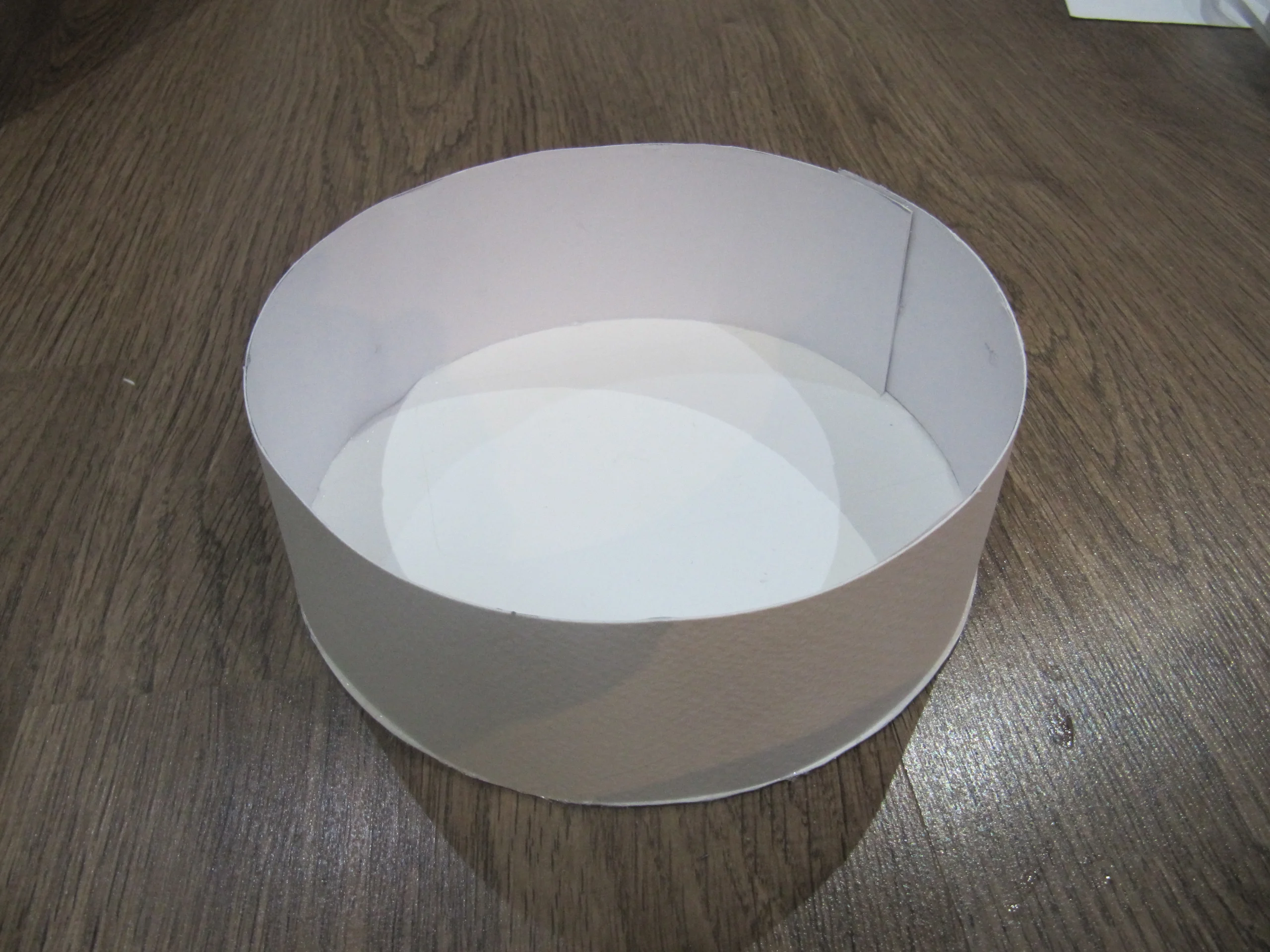
soft diffusion rather than direct light
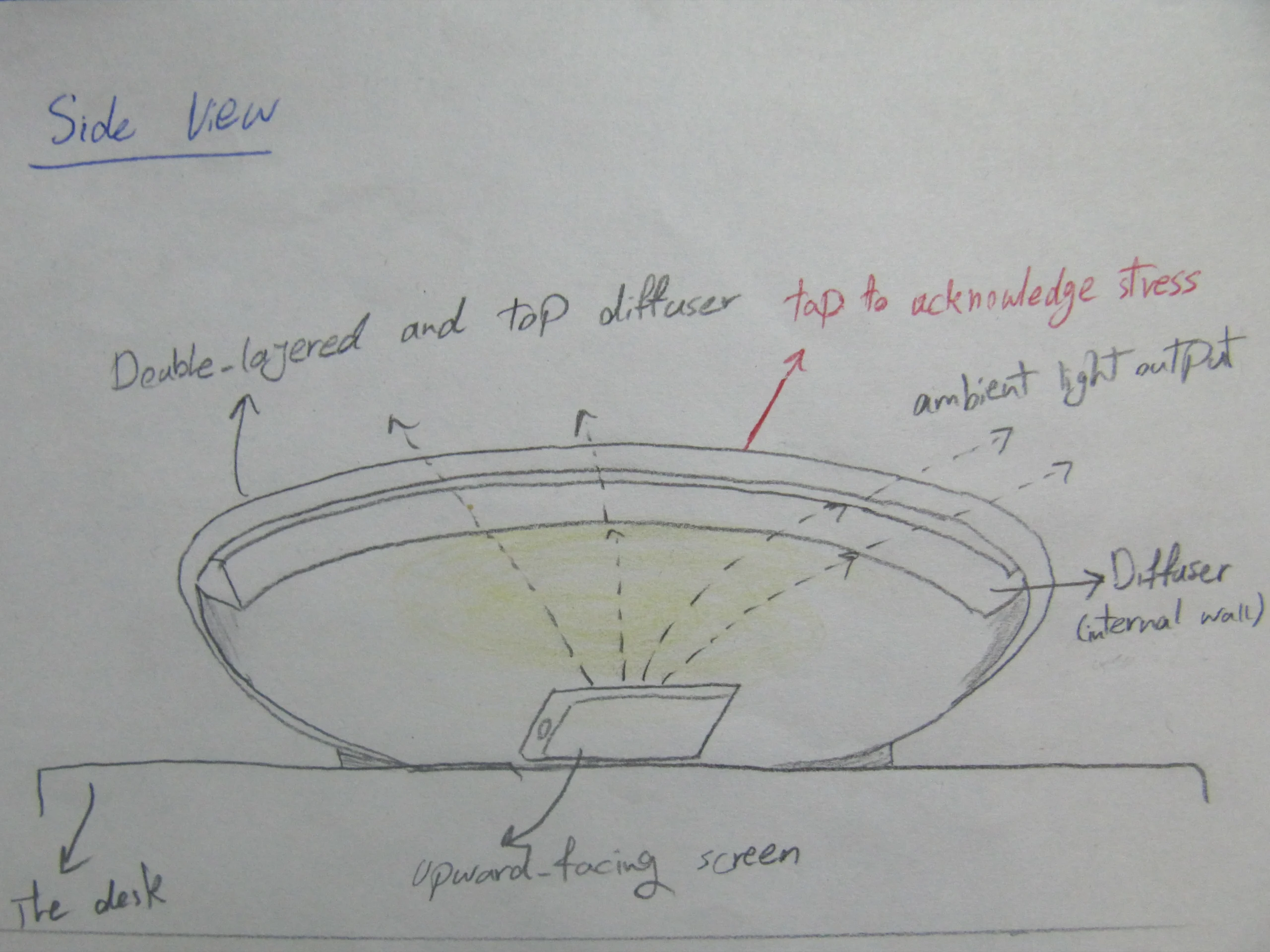
Cross Section sketch
Demo & Documentation
The demo simulates state transitions using pre-recorded light behaviors to evaluate perceptibility and emotional tone.
CalmCare was developed as a self-initiated, home-built exploration driven by personal interest in ambient interaction and wellbeing-oriented design. Working with limited resources encouraged an early focus on interaction qualities, perception, and emotional tone rather than technical implementation, aligning with the project’s human-centered goals.
The Wizard-of-Oz approach proved effective in evaluating how subtle changes in light color, rhythm, and diffusion are perceived in the periphery during desk work. Early observations suggest that slow, indirect light behaviors can communicate shifts in work intensity without disrupting focus or adding cognitive load.
Future development would involve refining the physical construction and exploring technical implementation using embedded hardware (e.g. microcontrollers and sensors) to enable autonomous behavior. Additionally, user testing in real work environments could further inform timing, intensity, and personalization of ambient cues. These next steps would allow CalmCare to transition from a conceptual prototype into a more robust interactive system while preserving its core design principles of agency, subtlety, and peripheral awareness.